Grandpa Never Talked About the War
The same war that often produces the worst of humanity, can also produce a gentle man who came home from the war more grateful than before.
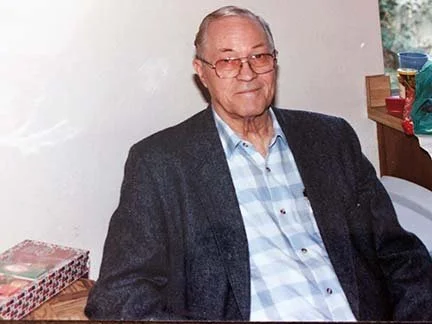
Grandpa Never Talked About the War
Somewhere between the distance of the last keystroke of an old manual typewriter and the last note struck on the strings of a well worn guitar…a song is born.
For Steve Kennan, one such song was “Grandpa Never Talked About the War.”
The songwriting craft has always been a source of intrigue to me–are songwriters writing to a ubiquitous, universal condition, or are they writing from personal experience?
“Grandpa Never Talked About the War” plumbs the depth of both those possibilities.
There was a real man behind the song. Wayne Jessup Kennan—aka DEAC was a 6’4”, 265 lbs. “He was a huge man, but he was so gentle.”
That juxtaposition lies at the heart of the song.
The same war that often produces the worst of humanity, can also produce a gentle man who came home from the war “more grateful than before.”
No war–period–comes without brutality. However, the Pacific Theater in World War II (where DEAC fought) was the essence of brutality. The Pacific Theater was often marked by fanaticism–Japanese soldiers fighting under the auspices of the code of bushido–where to surrender was dishonor–fighting to the death was the expectation–suicide was preferable to surrender.
A few weeks ago I heard Steve play this song at Guggman Haus. I’ve heard him play it before…nice song. Something was different though…this time. Steve summoned the ghost of his grandfather’s Pacific Theater experience, and tore the lid off the song.
It was an entirely different song.
“Grandpa had… half a world away at just 20 years old. The things that he saw made his memory cold, the dying, and the fighting, the friends that he lost defending their country at whatever the cost, grandpa was gentle, never showed me his scars. Grandpa never talked about the war.”
Damn.
Clearly personal…clearly written and sung from the deepest of deep personal experience. A grandson reflecting the reverence and respect for a man who has experienced the worst, but persevered, did not succumb to the violence…returned more grateful than before.
A beautiful byproduct of an artist opening himself…sharing vulnerability, is inviting the listener into that space.
That’s what happened on that Saturday at Guggman Haus. Steve invited me into his song.
I was transported back to a Christmas Eve conversation with my wife’s Great Uncle Sheldon. Like DEAC, Uncle Sheldon never talked about the war. Like DEAC, Uncle Sheldon was gentle, known for his generosity and sense of humor.
If you’ve ever heard the term…”that’s a knee-slapper,” that was Uncle Sheldon. Though, his twinkling blue eyes belied the carnage he had seen in World War II.
At the time of that Christmas Eve dinner, I was teaching high school U.S. History. We were studying World War II. I turned to Uncle Sheldon (knowing full-well he fought in WWII) and asked, “Where did you serve in World War II?”
He said, “I was in Italy in 1944.”
I asked, “Were you near Monte Cassino?”
“I was at Monte Cassino.”
Monte Cassino was particularly brutal. It was one of the longest and most brutal campaigns of the war. The Allies suffered 55,000 casualties–the Germans 20,000.
As casually as one would say, pass the rolls, Uncle Sheldon said, “I was in a bunker with my squad. A German mortar dropped in killing everyone but me.”
That’s a weight to carry…unspoken.
My experience of Uncle Sheldon was as the song says about DEAC, “He was always quiet and peaceful when he was around me. His smile would remind you what your family was for, and grandpa never talked about the war.”
Grandpa Never Talked About the War was originally written as a poem. He performed it first that way at a poetry reading somewhere in Broad Ripple. As he recounts, “When I read it the lady who was the host pulled me aside and said that she thought it was too emotional for that type of setting. I told her she was full of shit.”
Is this thing on…can I say that?
Yeah well, undettered, Steve used that as motivation. As he said, “I grew up punk rock…I have a bit of an anarchist heart in me and I’ve never agreed with war.”
“I think what it (the song) means to me is that the government can make rules and make its people do things, but the people are the real government and the beautiful human heart will never be extinguished.”
After carrying the weight of the Pacific Theater for a lifetime, it was evident DEAC’s time on this earth was soon nearing its end.
“When he knew he was dying, my grandpa called us round and we listened intently. Tried not to make a sound. He told us about the destruction he had seen, the death and the chaos and the places he’d been…. he tried to leave out the bloody details he wanted to point out something else….he said don’t let them tell you that’s what human beings are for, something so terrible as the second world war…..”they made it sound like this big brave thing but my friend got cut down and that’s all I seen”….”how would we know we were just 20 years old just how much hell this conflict could hold.” ….”We went there as children with bright hopeful eyes and we came home as men changed by its size he came home, but there were so many more who never came back to talk about the war.”
Even in warfare, you can’t kill the beautiful people.
Beautiful song.
Beautiful tribute.
Beautiful reminder…we are all humans sharing the sacred and profane…